
Timeline of significant events
1861: Ten years after the official
advent of the Gold Rush, Australia's first stock exchange was formed in
Melbourne. In the 1850s Victoria was Australia's gold mining centre, its
population increasing from 80,000 in 1851 to 540,000 in 1861.
1871: Thirty years after it lit the
first gas street light in Sydney, AGL took its place in history again, becoming
the second company to list on the Sydney Stock Exchange.
1885: Two years after the Broken Hill
Mining Company (private company) was established by a syndicate of seven men
from the Mt Gipps sheep station, the company was incorporated to become The
Broken Hill Proprietary Company Limited ('BHP'). In 1885, Broken Hill
Proprietary Company (BHP) listed on ASX.
1937: The Australian Associated Stock
Exchanges (AASE) was established in 1937. Since 1903 the state stock exchanges
had met on an informal basis, but in 1936 Sydney took the lead in formalising
the association. Initially this involved the Exchanges in Adelaide, Brisbane,
Hobart and Sydney. Melbourne and Perth joined soon after. Through the AASE the
Exchanges gradually brought in common listing requirements for companies and
uniform brokerage and other rules for stockbroking firms. They also set the
ground rules for commissions and the flotation of government and
semi-government loan raisings.
1938: Publication of the first share
price index.
1939: Sydney Stock Exchange closed
for the first time due to the declaration of the World War.
1960: Sydney Futures Exchange began
trading as Sydney Greasy Wool Futures Exchange (SGWFE). Its original goal was
to provide Australian wool traders with hedging facilities in their own
country. SGWFE offered a single contract of greasy wool that by the end of the
year had traded 19,042 lots.
1969–1970: The Poseidon bubble (a mining
boom triggered by a nickel discovery in Western Australia) caused Australian
mining shares to soar and then crash, prompting regulatory recommendations that
ultimately led to Australia's national companies and securities legislation.
1976: The Australian Options Market
was established, trading call options.
1980: The separate Melbourne and
Sydney stock exchange indices were replaced by Australian Stock Exchange
indices.
1984: Brokers' commission rates were
deregulated. Commissions have gradually fallen ever since, with rates today as
low as 0.12% or 0.05% from discount internet-based brokers.
1984: Sydney Stock Exchange closed
due to heavy rain and flooding on Friday 9 November 1984 with 70 millimetres of
rain falling in one half-hour. All trading on the floor of the Sydney Exchange
was suspended throughout Friday. Damage tolled $2 million and repairs took more
than six months, with new carpet laid and cables and computers replaced.Stockbrokers
who had taken advantage of joint access were able to trade on the Stock
Exchange of Melbourne. And, with the Sydney trading floor closed by
floodwaters, the Melbourne Exchange enjoyed its busiest trading day for the
year. After that episode a back-up site was established out of the Sydney CBD.
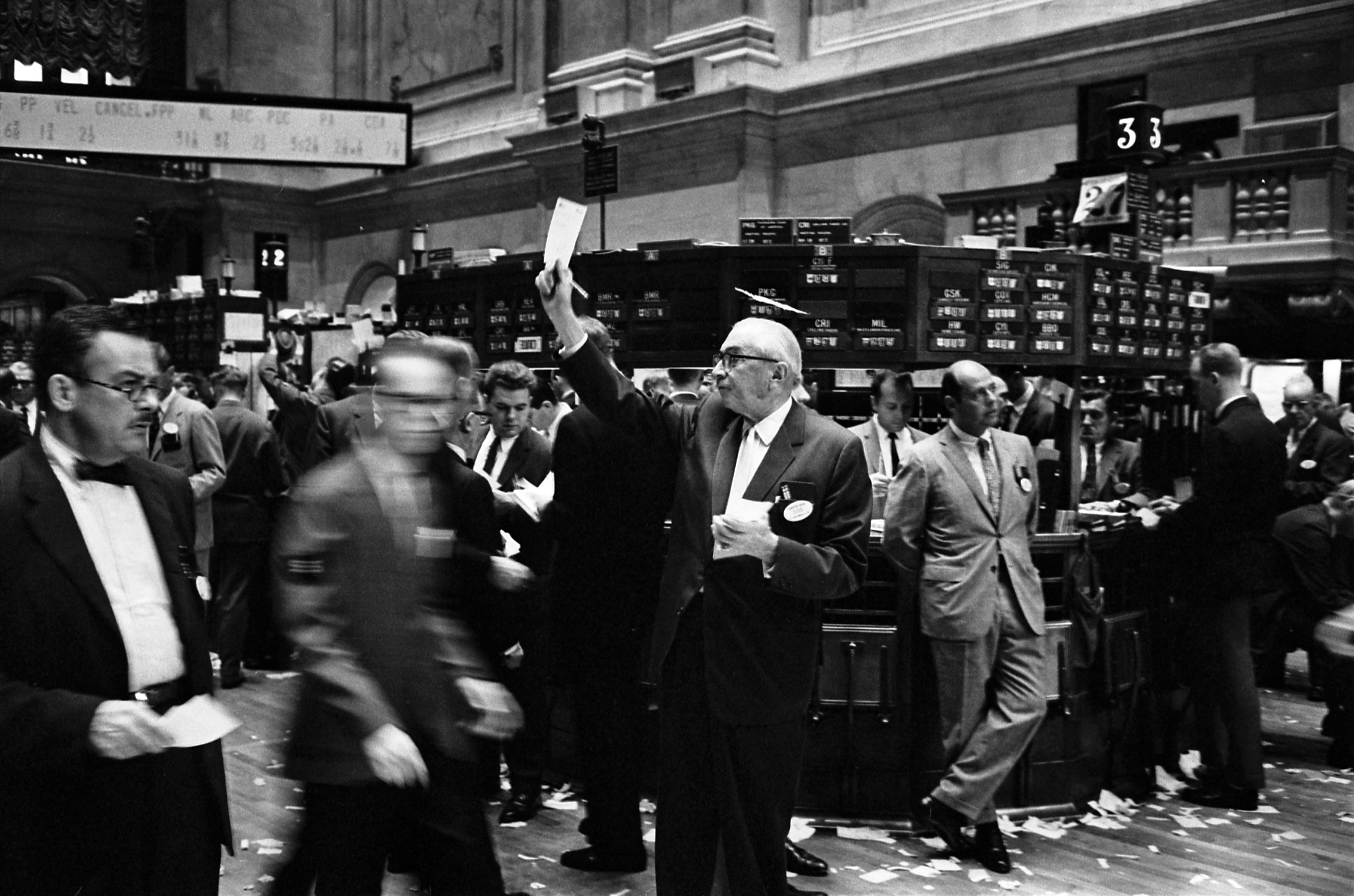
1987: The Australian Stock Exchange
Limited (ASX) was formed on 1 April 1987, through incorporation under
legislation of the Australian Parliament. The formation of this national stock
exchange involved the amalgamation of the six independent stock exchanges that
had operated in the states' capital cities.
Launch of
the Stock Exchange Automated Trading System (SEATS). It was a far cry from the
original system which dated back over 100 years. During that time there had
been three different forms of trading on the Australian stock exchanges. The
earliest was the auction-based call system, which saw a stock exchange employee
(the Caller) call the name of each listed security in turn while Members bid,
offered, sold or bought the stock at each call. This system proved inadequate
to handle the increased volume of trading during the mining booms. It was
replaced by the 'post' system in the early 1960s, which involved stocks being
quoted on 'posts' or 'boards'. 'Chalkies' were employed by the Stock Exchange and
it was their function to record in chalk the bids and offers of the operators
(employees of stockbrokers) and the sales made. This system stayed in place
until 1987.
1990: A warrants market was
established.
1993: Fixed-interest securities were
added (see Interest rate market below). Also in 1993, the FAST system of accelerated
settlement was established, and the following year the CHESS system (see Settlement
below) was introduced, superseding FAST.
1994: The Sydney Futures Exchange
announced trading in futures over individual ASX stocks. The ASX responded with
the Low Exercise Price Option or LEPO (see below). The SFE went to court,
claiming that LEPOs were futures and therefore that the ASX could not offer
them. However, the court held they were options and so LEPOs were introduced in
1995.
1995: Stamp duty on share
transactions was halved from 0.3% to 0.15%. The ASX had agreed with the Queensland
State Government to locate staff in Brisbane in exchange for the stamp duty
reduction there, and the other states followed suit so as not to lose brokerage
business to Queensland. In 2000 stamp duty was abolished in all states as part
of the introduction of the GST.
1996: The exchange members (brokers
etc.) voted to demutualise. The exchange was incorporated as ASX Limited and in
1998 the company was listed on the ASX itself, with the Australian Securities
and Investments Commission enforcing the listing rules for ASX Limited.
1997: Electronic trading commences as
the option market moves from floor to screen. A phased transition to the
electronic CLICK system for derivatives began.
1998: ASX demutualised and become a
listed company. It was the first exchange in the world to demutualise and list
on its own market, a trend that has been imitated by several other exchanges
over the years. The Australian Mutual Provident Society began in 1849 as an
organisation offering life insurance. Now known as AMP it became a publicly
listed company on the ASX in 1998.
2000: In October, ASX acquires a 15%
stake in the trading and order management software company IRESS (formerly
BridgeDFS Ltd).

2001: Stamp duty on marketable
securities was abolished.
2006: The ASX announced a merger with
the Sydney Futures Exchange, the primary derivatives exchange in Australia.
2010: The ASX announced a merger with
Singapore Exchange.
2011: Treasurer Wayne Swan finds the
proposed merger with the Singapore Stock Exchange to not be in the best
interests of Australia and refuses to grant permission for the merger.
Reference

First Blog that I enjoyed reading the most was Heather R's. I found Heather's blog extremely informative on her company ASX. My company is listed on the Australia Stock Exchange and her blog gave me brief-easy-to-understand overview of the stock market and what it is it actually does. I liked how Heather gave a brief History of ASX, I found that to be very informative and useful to understand why my company is on the Australia Stock Exchange. Great blog, I look forward to learning more about Heather's company.
ReplyDelete